
What Should You Expect During a TMJ Consultation in North Quincy, MA?

Jaw pain, clicking, or an ache that spreads toward your ear can be confusing on its own. Not knowing what a dental visit for it actually involves can make it feel even more uncertain.
Maybe you've been living with a sore jaw for weeks, telling yourself it will settle down on its own. Or maybe a friend mentioned "TMJ" and you're not sure if that's even what's happening to you. Either way, booking that first appointment is often the hardest part, mostly because it's unclear what you're walking into.
A TMJ consultation is simply the first step toward understanding what's going on with your jaw joint and muscles. It's a conversation and an examination, not a single test with an instant answer.
So, what actually happens once you book a TMJ consultation in North Quincy, MA? Let's walk through it, step by step, so you know exactly what to expect before you sit in the chair.
What Is a TMJ Consultation?
A TMJ consultation is a focused evaluation of your temporomandibular joints, the joints that connect your jaw to your skull, along with the muscles that move your jaw. You have two of these joints, one on each side of your face, just in front of your ears.
There is no single standard test for temporomandibular disorders (TMDs). Instead, a dentist builds a picture of what's happening by combining your symptoms, your history, and a hands-on exam. Imaging is added only when it's needed to confirm what the exam suggests.
Because there's no one-size-fits-all test, the visit tends to feel more like an in-depth conversation than a typical dental appointment. That's by design. TMDs cover more than 30 different conditions affecting the jaw joint and muscles, so your dentist needs enough detail to figure out which pattern fits your symptoms.
Here is what that process typically looks like.
1. A Conversation About Your Symptoms
The visit usually starts with questions, not instruments. Your dentist will want to know:
- Where the pain or discomfort is located
- When it started and how often it happens
- What makes it better or worse
- Whether it stays in one spot or spreads to your face, neck, or ear
- Whether you notice clicking, popping, or locking when you open or close your mouth
Try to think through these details before your appointment. The more specific you can be, the easier it is to identify a pattern. If your symptoms come and go, mention that too. A dentist who knows your pain flares up after long meetings or a stressful week has a very different clue than one who hears it happens every time you wake up.
2. A Review of Your Medical and Dental History
Next, your dentist will ask about your broader health, not just your jaw. TMJ symptoms can show up alongside other conditions, such as frequent headaches, neck or back pain, or trouble sleeping.
You'll likely be asked about:
- Past dental work, injuries, or jaw surgeries
- Habits like teeth grinding, jaw clenching, nail biting, or gum chewing
- Any medications you currently take
- Stress levels, since tension often shows up in the jaw first
None of these questions are meant to catch you out. They help your dentist rule things out and narrow down what's actually contributing to your symptoms. It's worth being upfront here, even about habits that feel minor, like chewing on pens during work calls. Small details like that often turn out to matter more than people expect.
3. A Hands-On Examination of Your Jaw
This is usually the most hands-on part of the visit. Your dentist will gently press around your jaw joints and chewing muscles to check for tenderness, and will ask you to open and close your mouth to watch how it moves.
During this exam, they're checking for:
- Clicking, popping, or grating sounds
- How wide you can comfortably open your mouth
- Whether your jaw shifts to one side as you open
- Any locking or restricted movement
- Tenderness in the muscles around your jaw, temples, or neck
It's worth knowing that painless clicking or popping in the jaw is common and doesn't automatically mean something is wrong. It's the painful or restrictive symptoms that usually need attention. Your dentist will likely also feel along your neck and shoulders, since tight muscles in that area often connect back to jaw tension.
4. Checking How Your Teeth Fit Together
Your dentist will also look at your bite, meaning how your upper and lower teeth meet when you close your mouth. A recent change in how your teeth fit together can be a useful clue, even though a misaligned bite on its own isn't considered a cause of TMJ disorders.
This step is about gathering information, not about jumping straight to changing your bite or teeth. Reputable TMJ care avoids permanent changes to your teeth or jaw unless there's a clear, specific reason for it. If a dentist suggests grinding down teeth or major orthodontic work as a first step for TMJ pain, that's worth a second opinion.
5. Imaging, If Needed
Not every TMJ consultation requires imaging. If your dentist needs a closer look at the joint itself, they may recommend an X-ray, an MRI, or a CT scan.
These tools help rule out other explanations and confirm what the physical exam already suggests. They're used to add clarity, not as the first or only step in diagnosis. Many people are surprised that imaging isn't automatic, but for many TMJ symptoms, the history and physical exam already tell your dentist most of what they need to know.
6. A Discussion of Your Diagnosis
Once your dentist has gathered enough information, they'll walk you through what they believe is going on. This is a good time to ask questions. Understanding why you have certain symptoms usually makes the next steps easier to follow.
Keep in mind that many jaw joint and muscle problems are temporary and improve without extensive treatment. Your dentist should be able to tell you where your symptoms likely fall on that spectrum, and should be willing to explain their reasoning rather than simply naming a condition and moving on.
7. A Plan for Treatment or Next Steps
Finally, your dentist will outline a plan. In most cases, this starts with simple, conservative steps, such as:
- Eating softer foods for a while
- Applying heat or cold to the area
- Over-the-counter anti-inflammatory medication
- Reducing habits like clenching or gum chewing
- Gentle jaw stretches or exercises
If these steps aren't enough, your dentist may suggest additional options like physical therapy or a properly fitted night guard. More involved procedures are generally reserved for cases that don't respond to conservative care, and should only be considered after simpler options have had a fair chance to work.
When Should You Book a TMJ Consultation?
You don't need to wait until the pain becomes unbearable. It's worth scheduling a TMJ evaluation in North Quincy, MA, if you notice:
- Jaw pain that doesn't improve within a couple of weeks
- Clicking or popping that comes with pain, not just sound
- Your jaw locking or getting stuck when opening or closing
- Pain that spreads to your face, temples, or neck
- Ringing in your ears, ear pain, or dizziness alongside jaw symptoms
- A noticeable change in how your teeth fit together
If your jaw suddenly locks and won't move, or if you're dealing with severe pain, swelling, or fever, seek prompt medical or dental attention rather than waiting for a routine appointment.
Final Thoughts
A TMJ consultation is really just a structured conversation and exam designed to figure out what's behind your symptoms. There's nothing to prepare beyond paying attention to your symptoms and being ready to describe them clearly.
If jaw pain, clicking, or related symptoms have been bothering you, a consultation is the most direct way to get an answer instead of guessing at what might help. Reach out to a TMJ dentist in North Quincy, MA, to schedule an evaluation and find out what your next step should be.
Frequently Asked Questions (FAQs)
1. Does a TMJ consultation hurt?
The exam itself shouldn't cause more than mild, brief discomfort when your dentist presses on tender areas. It's a gentle, hands-on evaluation, not a procedure.
2. How long does a TMJ consultation take?
Most initial consultations involve a detailed conversation and physical exam, so plan for more time than a routine dental check-up. The exact length depends on your symptoms and whether imaging is needed.
3. Do I need a referral to see a TMJ dentist?
Typically not. You can usually book a TMJ consultation directly with a dentist who evaluates jaw joint and muscle disorders.
4. Will I need imaging at my first visit?
Not always. Many consultations start with a history and physical exam alone. Imaging is added only if your dentist needs more information to confirm a diagnosis.
5. What should I bring to my TMJ consultation?
A list of your symptoms, when they started, and what makes them better or worse. If you've had prior imaging, dental records, or see other providers for related pain, bring that information too.
6. What happens if my symptoms don't match a clear TMJ pattern?
Your dentist may want to rule out other causes of facial or jaw pain before settling on a diagnosis. This can mean asking more questions or coordinating with another provider, rather than guessing at a treatment plan.
7. Can I go straight to treatment without a consultation first?
It's not recommended. Treating jaw pain without a proper evaluation risks missing the actual cause, which can waste time and, in some cases, make symptoms worse.
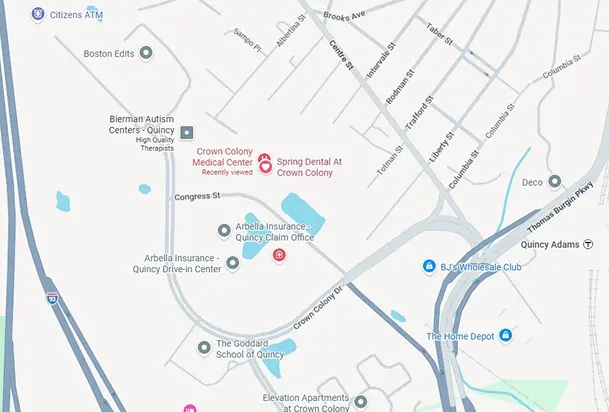
Visit Our Clinics
Choose your nearest clinic location.

Available Days: Tuesday, Wednesday, Friday, and Saturday
Phone Number: 617-328-0790
Available Days: Monday & Thursday
Phone Number: 617-984-0044



Overview
Services
Support
Privacy Policy | © 2026 Spring Dental | All Rights Reserved | Digital Marketing by Remedo