
How Can You Tell If You Need TMJ Therapy in North Quincy, MA?

We often take the seamless movement of our bodies for granted until something stops working perfectly. Consider how many times a day you talk, chew, yawn, or laugh. All of these everyday actions rely on a highly sophisticated pair of joints located right in front of your ears. Your temporomandibular joints, commonly abbreviated as TMJ, act as the structural hinges connecting your lower jaw to your skull.
When these joints, along with the complex network of facial muscles surrounding them, are healthy, your jaw glides effortlessly. However, when things fall out of alignment, even the simplest daily movements can become deeply uncomfortable.
Many people live with chronic facial pain, frequent headaches, or an unsettling clicking sound in their jaw without ever realizing they are experiencing a TMJ disorder. They might blame their stress, bad posture, or poor sleep, completely missing the structural root cause.
If you are wondering whether your ongoing discomfort is just a temporary nuisance or a sign of something deeper, it helps to understand the red flags. Fortunately, specialized care is available close to home. Partnering with a dedicated dental clinic in North Quincy, MA, like Spring Dental, can provide you with the definitive answers and personalized TMJ therapy you need to reclaim a pain-free life.
What Exactly is TMJ Therapy?
Before figuring out if you need treatment, it helps to demystify what TMJ therapy actually involves. A common misconception is that addressing jaw pain always requires invasive surgery or intensive medical procedures. In reality, modern dental care favors conservative, highly personalized, and non invasive solutions.
TMJ therapy is an umbrella term for a variety of treatments designed to relieve pressure on your temporomandibular joints, reduce muscle inflammation, and restore the natural balance of your bite. Depending on what is triggering your specific discomfort, therapy can range from custom fitted oral appliances that you wear at night to gentle physical therapy exercises, lifestyle adjustments, and restorative dental work. The goal is simple: give your hard working jaw joints the structural support and rest they need to heal.
Five Clear Signs You Need TMJ Therapy
Because the symptoms of a jaw disorder can masquerade as other health issues, many individuals delay seeking help. If you recognize any of the following five warning signs in your daily life, it is highly likely that your jaw joint is calling out for professional attention.
1. Frequent Headaches and Facial Soreness
Do you regularly wake up with a dull, aching headache concentrated around your temples or behind your eyes? Are your cheeks and jaw muscles tender to the touch first thing in the morning? This localized facial pain is a classic indicator of nocturnal bruxism, a condition where you unconsciously clench or grind your teeth while sleeping. The massive, continuous pressure exhausted the facial muscles, radiating upward and triggering persistent tension headaches.
2. Clicking, Popping, or Grating Sounds
One of the most recognizable signs of a jaw complication is an audible clicking or popping sound when you open your mouth wide to eat, yawn, or speak. Inside each jaw joint sits a tiny, protective cartilage disc that absorbs shock and ensures smooth movement. If this disc slips out of place or erodes, the bones of the joint begin to rub against one another or catch awkwardly, producing distinct clicking or grating noises.
3. A Jaw That Regularly Locks or Catches
Few things are quite as unsettling as feeling your jaw momentarily freeze in place. If your jaw ever feels like it is catching, sticking, or completely locking when you try to open your mouth wide or close it after a large bite, your joint mechanics are significantly compromised. This locking happens when the cartilage disc becomes physically trapped, preventing the jawbone from sliding along its natural track.
4. Chronic Neck, Shoulder, and Ear Pain
Because your temporomandibular joints are deeply connected to a complex web of nerves and muscles, the pain rarely stays isolated in your jaw. Active TMJ inflammation can radiate downward into your neck, upper back, and shoulders, causing chronic muscle stiffness. Furthermore, because the joint is located directly adjacent to the ear canal, many patients report a false sensation of an earache, a feeling of fullness in the ear, or a persistent ringing sound known as tinnitus.
5. Sudden Changes in Your Bite
Have you recently noticed that your upper and lower teeth no longer seem to fit together comfortably when you close your mouth? Does chewing suddenly feel awkward or uneven? When a jaw joint becomes severely inflamed or structurally displaced, it can subtly shift the physical alignment of your entire jaw, altering your natural bite and placing uneven pressure on individual teeth.
Uncovering the Root Causes of Your Discomfort
Determining whether you need TMJ therapy also involves looking at your daily habits and health history. At a premier dental clinic in North Quincy, MA, our diagnostic process focuses heavily on identifying the unique lifestyle and physical factors contributing to your pain.
Stress and Everyday Clenching
High levels of everyday stress often manifest physically. Many people unconsciously hold their teeth together tightly throughout a stressful workday or while driving, forcing their jaw muscles into a prolonged state of tension. Over time, this lack of relaxation leads to painful muscle spasms.
Physical Trauma and Structural Malocclusion
A past sports injury, a minor car accident, or a direct blow to the face can cause long term structural damage to the jaw joint. Additionally, naturally misaligned teeth or poorly fitting historical dental work can force your jaw to shift awkwardly to chew, straining the joint over time.
How a Local Dental Clinic in North Quincy, MA Can Help
If these symptoms sound all too familiar, you do not have to endure the discomfort indefinitely. Getting an evaluation at a trusted local practice like Spring Dental is the most reliable way to find out if TMJ therapy is the right path forward for your smile.
Comprehensive Digital Screening
When you visit our modern office, we perform a meticulous physical examination. We watch and listen to your jaw as it moves, gently feel your facial muscles for trigger points of tension, and use advanced digital imaging to get a crystal clear view of your joint structures and bone density.
Custom-Made Nightguards and Splint Therapy
If we discover that your pain is driven by nighttime teeth grinding, a custom-fabricated nightguard is often the ideal solution. Unlike bulky, generic store-bought options that can actually worsen your bite, a professional oral splint is customized to fit your unique teeth perfectly. It gently repositions your jaw into a neutral, relaxed stance and absorbs the destructive forces of grinding, allowing your muscles to rest and recover overnight.
Take the First Step Toward Lasting Comfort
Living with constant jaw tension, regular headaches, and clicking sounds can drain your daily energy and take the joy out of simple pleasures like sharing a meal with loved ones. If you are ready to find out if TMJ therapy is the key to unlocking a pain-free lifestyle, the team at Spring Dental is here to guide you every step of the way. As a premier dental clinic in North Quincy, MA, we pride ourselves on delivering gentle, personalized care designed to restore total harmony to your smile. Contact our office today to schedule your consultation and experience the difference that compassionate dentistry can make.
Frequently Asked Questions
Can TMJ disorders cause permanent damage if left untreated?
Yes, ignoring severe jaw joint issues can lead to long-term consequences. Over time, chronic friction within the joint can permanently wear down the protective cartilage disc, leading to osteoarthritis in the jaw. Untreated bruxism can also crack, flatten, or severely wear down your natural tooth enamel, requiring extensive restorative treatments later on.
Is TMJ therapy covered by regular dental insurance?
Coverage varies significantly depending on your specific insurance provider and your individual plan details. Many diagnostic exams and certain protective custom appliances are covered under standard dental benefits. Our friendly office team is always happy to look over your insurance details and help you maximize your coverage.
How long does it take to feel relief after starting TMJ therapy?
Every patient heals at a unique pace, but many individuals notice a significant reduction in their facial tension and headache frequency within the first few weeks of consistently wearing a custom nightguard. More complex cases involving bite realignment may take a few months of coordinated care to achieve permanent, stable comfort.
Are there simple steps I can take at home to ease my jaw pain right now?
Absolutely. While waiting for your professional consultation, you can find temporary relief by eating a soft food diet, avoiding sticky or extremely chewy foods, applying warm compresses to the sides of your face to relax the muscles, and practicing mindful relaxation techniques to ensure your teeth are not touching throughout the day.
Visit Our Clinics
Choose your nearest clinic location.

Available Days: Tuesday, Wednesday, Friday, and Saturday
Phone Number: 617-328-0790
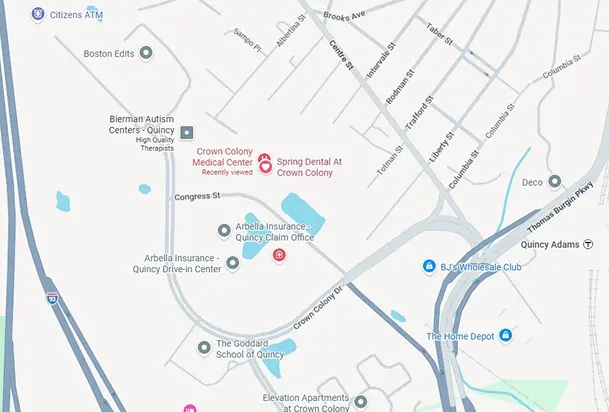
Available Days: Monday & Thursday
Phone Number: 617-984-0044



Overview
Services
Support
Privacy Policy | © 2026 Spring Dental | All Rights Reserved | Digital Marketing by Remedo